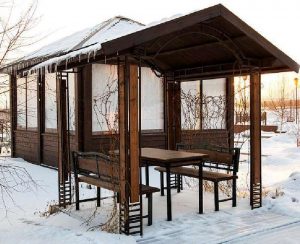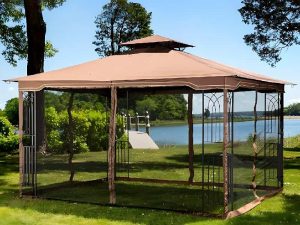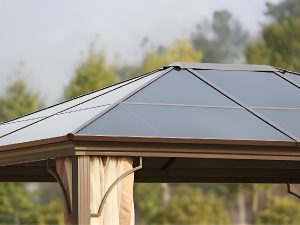

If you are thinking about grilling under a gazebo or pergola, one of the first questions is likely to be whether it is actually safe to do so. The same question also matters for retailers, importers, and outdoor-living brands choosing structures that may be used around barbecue areas.

Quick Answer: Can You Grill Under a Gazebo or Pergola?
Sometimes, but not every gazebo or pergola—or every grill—is suitable for this setup. Whether it is appropriate depends mainly on the grill manufacturer’s instructions, the clearance around and above the grill, the materials used in the structure, and how easily heat and smoke can escape.
Below, we look more closely at these factors and how they affect the suitability of a covered outdoor space for grilling.
What Determines Whether a Covered Outdoor Space Is Suitable for Grilling?
Whether you can grill under a covered outdoor structure depends less on what the structure is called and more on how the grill and the surrounding space work together. Before deciding, pay particular attention to the following factors.
1. Start With the Grill Manufacturer’s Instructions
The grill manual should be your first reference point. Different grills have different clearance and installation requirements, and some manufacturers specifically restrict use beneath certain types of overhead construction.
For this reason, there is no single clearance distance that can safely be applied to every gas, charcoal, or electric grill. Check the requirements for the specific model you are using rather than relying on a general rule found online.
2. Look at What Is Above and Around the Grill
The frame material alone does not determine whether a gazebo or pergola is suitable for grilling. What matters is the entire area exposed to heat, flame, and smoke.
For example, a steel-framed gazebo with a fabric canopy creates a very different environment from one with a metal roof. Wood, fabric canopies, curtains, furniture, and other nearby materials also need to be considered.

Non-combustible components can reduce one source of fire risk, but they do not eliminate the need for proper clearance or ventilation. Fabric canopies and other roof materials can also vary considerably in their flame resistance and heat tolerance, so the structure manufacturer’s instructions should be checked as well.
3. Consider How Open the Structure Is
An open-sided structure generally allows heat and smoke to disperse more easily than one enclosed with curtains, dense privacy screens, or solid side panels.
This distinction can be more important than whether the structure is called a gazebo or pergola. A structure that is open when installed may behave quite differently once curtains or side panels are closed.

Adequate fresh air is especially important when charcoal is involved because burning charcoal produces carbon monoxide. The U.S. Consumer Product Safety Commission advises that charcoal grills be used outdoors in the open air with plenty of fresh air.
4. Consider the Type of Grill
The fuel source also changes the risks involved.
Charcoal grills can produce embers, ash, smoke, and carbon monoxide. Gas grills involve flame, flare-ups, grease fires, and fuel-system considerations. Electric grills avoid combustion from gas or charcoal, but they still generate high heat and cooking smoke and must be used according to the manufacturer’s instructions.

The more useful question, therefore, is not simply whether a particular gazebo or pergola is suitable for grilling, but whether the specific grill and structure are suitable for use together.
Main Risks When Grilling Under a Covered Structure
Grilling beneath a roof or canopy introduces several considerations that may be easier to manage in a fully open outdoor area. The most important are fire, heat, smoke, and grease buildup.
1. Fire and Flare-Ups
Grills can produce open flames and sudden flare-ups, particularly when grease drips onto a heat source.
Combustible materials such as fabric, curtains, wood, or nearby furnishings can increase the risk if they are positioned too close to the grill. The National Fire Protection Association recommends keeping grills well away from anything that can burn and positioning them away from homes, deck railings, eaves, and overhanging branches.
2. Heat Buildup
Heat does not only travel directly upward. Radiant heat can also affect nearby roof panels, framing, walls, and furnishings.
Even non-combustible components can become very hot, while some roofing materials, coatings, fabrics, or plastics may discolor, deform, or deteriorate after repeated exposure to high temperatures.
This is another reason why clearance should be based on the requirements of the actual grill and structure rather than on a general rule.
3. Smoke and Carbon Monoxide
A roof does not automatically make an outdoor space poorly ventilated, but enclosing the sides can slow the dispersal of heat and smoke.
This deserves particular attention when using charcoal because carbon monoxide is colorless and odorless. Charcoal grills should remain in an open outdoor environment with plenty of fresh air.
4. Grease and Soot Buildup
Repeated grilling can leave grease, smoke residue, and soot on roof panels and surrounding surfaces.
Apart from affecting the appearance and maintenance of the structure, accumulated grease can contribute to fire risk. Regular cleaning of both the grill and the surrounding cooking area is therefore important for spaces used frequently for barbecuing.
Quick Safety Checklist Before You Grill
Before using a grill beneath any covered outdoor structure, run through these basic checks:
- Check the grill manual first. Confirm where the manufacturer allows the grill to be used and follow its clearance requirements.
- Check above and around the grill. Keep combustible materials such as fabric, curtains, wood, furniture, and branches away from the cooking area.
- Maintain good ventilation. Keep the space open enough for heat and smoke to disperse, particularly when using charcoal.
- Consider the actual roof material. Do not assume that a metal frame makes the entire structure suitable for exposure to grill heat.
- Use a stable location. Position the grill where it cannot easily tip, move, or come into contact with surrounding materials.
- Keep the grill and cooking area clean. Regularly remove grease and fat buildup that could contribute to flare-ups or fires.
- Never leave a lit grill unattended.
- If the setup cannot meet the manufacturer’s requirements, move the grill to a more open location.
A gazebo or pergola can make an outdoor cooking area more comfortable, but it should never be used to compensate for insufficient clearance or ventilation.
What About a Dedicated Grill Gazebo?
If the main purpose of the space is outdoor cooking, a dedicated grill gazebo can be a more practical starting point than adapting a general-purpose gazebo later.
These structures are typically designed around the cooking area and may include features such as an open-sided layout, side shelves, hooks, or preparation surfaces.

However, the product name “grill gazebo” should not be taken to mean that every grill can automatically be used beneath it. The clearance and installation requirements of the intended grill still apply, and adequate ventilation remains important.
When choosing one, it makes more sense to evaluate the grill and gazebo as a complete setup than to consider the shelter on its own.
Final Considerations
The key question is not simply whether grilling under a gazebo or pergola is possible. What matters is whether the specific grill, roof material, clearance, ventilation, and surrounding conditions work safely together.
Start with the grill and structure manufacturers’ instructions, keep combustible materials away from the cooking area, maintain adequate airflow, and move the grill to a more open location whenever the required conditions cannot be met.
For retailers, importers, and outdoor-living brands sourcing products for barbecue or outdoor cooking areas, LIDA OUTDOOR supplies a range of gazebo and pergola structures for residential and commercial markets. For wholesale, OEM, or project requirements, our team can help you compare suitable structures based on the intended application and target market.