
A patio umbrella can look stable on a calm day and still become difficult to manage when the wind picks up. Many buyers start by asking for a heavier base. Weight matters, but it is only one part of the answer. The umbrella type, canopy size, exposure of the outdoor space, and the way the pole connects to the ground all affect stability. This is especially important for buyers choosing umbrellas for open patios, poolside areas, restaurants, or retail collections. A base that works for a small center-pole umbrella in a sheltered backyard may not be suitable for a large side-pole model on an exposed terrace.
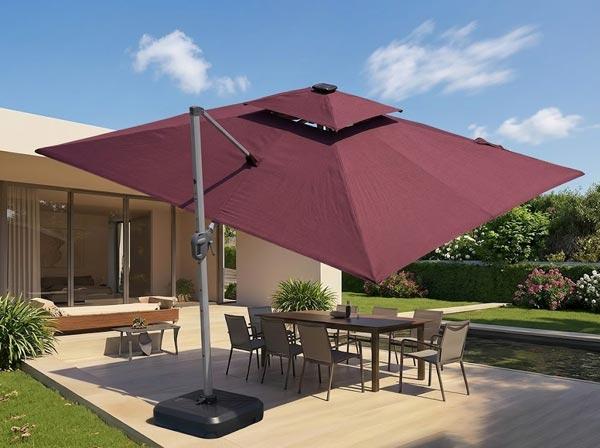
This guide explains how to secure a patio umbrella from wind in practical buying terms. It also shows when a base is enough, when a fixed mounting system may be worth considering, and why closing the canopy remains the safest action in unsuitable weather.
Start With the Umbrella Type and the Site
There is no one base or anchoring method that fits every outdoor umbrella. Before choosing a solution, first confirm the pole position, canopy size, and where the umbrella will be used.
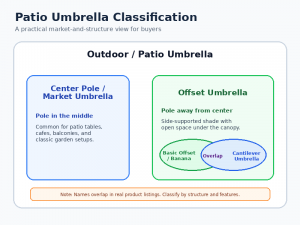
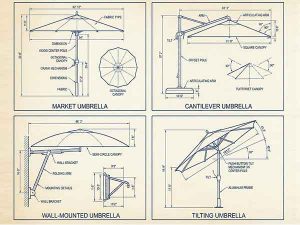
A center-pole umbrella keeps most of the canopy load above the base. It is often used through a patio table and can benefit from support at both the table and the ground. An offset or cantilever umbrella places the pole to one side, so its canopy creates more leverage and usually needs a wider cross base with compatible counterweights.
The site matters just as much. A covered courtyard, an open deck, a rooftop, and a poolside area can experience very different gusts. Larger canopies and more exposed locations should be reviewed more carefully before the model or base is confirmed. If you are still comparing structures, this overview of patio umbrella types and applications can help clarify the main categories.
Quick Guide: Which Patio Umbrella Fixing Method Fits?
| Fixing Method | Best Fit | What It Does | Key Limitation |
|---|---|---|---|
| Weighted umbrella base | Small or medium center-pole umbrella | Adds downward weight and helps reduce movement | May not be enough for a large canopy or exposed site |
| Table hole plus base | Center-pole or market umbrella at a dining table | The table limits side-to-side pole movement while the base resists tipping | The table hole does not replace a suitable base |
| Cross base plus counterweights | Offset or cantilever umbrella | Spreads the load and adds the weight needed for a side-pole structure | An empty cross base is not a complete solution |
| Water- or sand-filled base | Compatible umbrella base systems | Adds adjustable ballast for residential patio use | Fill level and product compatibility still need checking |
| Permanent deck or ground mount | Fixed commercial or long-term installations | Connects the umbrella system to a suitable structure | Must match the umbrella, substrate, and installation requirements |
| Close and secure the canopy | Every patio umbrella | Removes the large wind-catching surface when conditions change | This is a safety action, not a substitute for correct installation |
The best method is usually the one that matches the umbrella’s own base specification and the actual installation location. Avoid assuming that a heavier generic base or a ground anchor will work with every model.
1. Use a Compatible Weighted Base for Center-Pole Umbrellas
A weighted base is the most common starting point for a small or medium center-pole umbrella. It helps keep the pole upright and reduces sliding or rocking during normal outdoor use. For a sheltered patio, balcony, or small garden, a suitable base can be a practical solution when it is selected for the canopy size and pole diameter.
However, base weight should not be chosen by guesswork. A larger canopy catches more air, and an open location can create a stronger force at the top of the pole. The required base specification should come from the umbrella manufacturer or product manual, especially where local wind exposure is higher than normal.
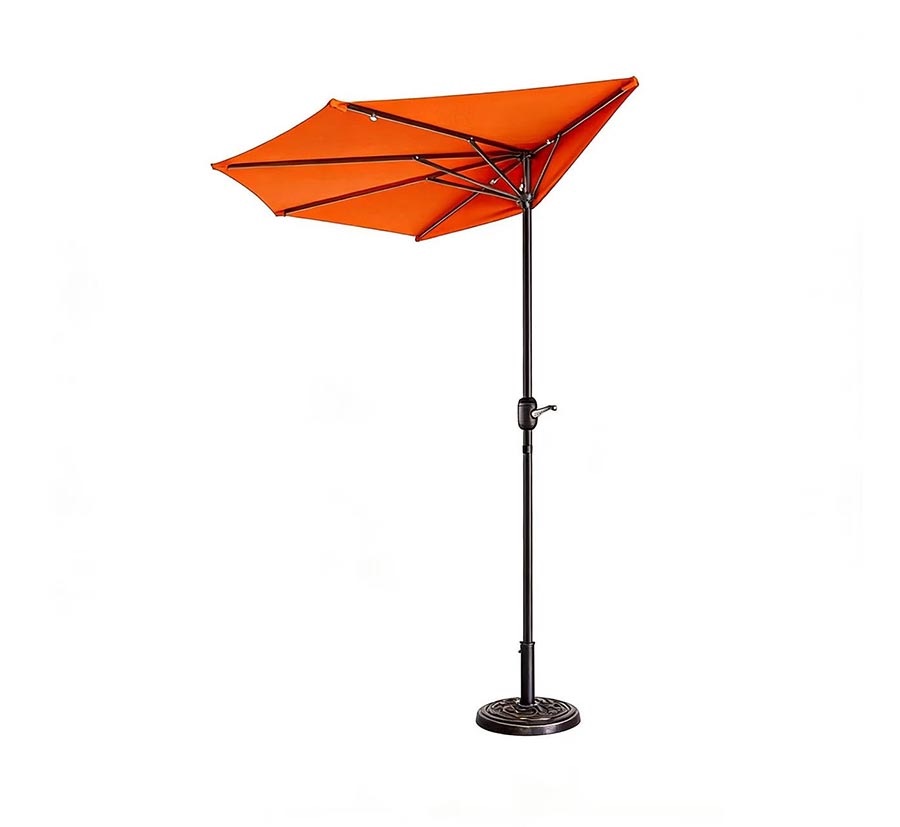
For a small wall-side layout, a half-round patio umbrella can be useful because it covers a compact seating area without needing a full circular canopy. It should still be closed when the weather becomes unsuitable.
2. Pair a Patio Table Hole With a Suitable Base
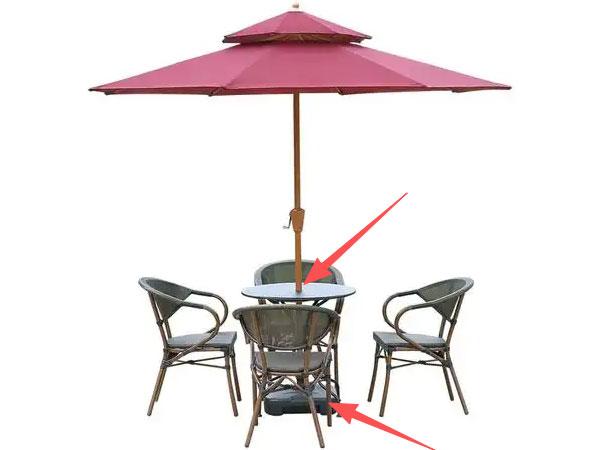
For a center-pole umbrella used at a dining table, the table hole gives the pole an extra point of support. It helps limit lateral movement and can make the everyday setup feel more stable than using a light base alone.
The important distinction is that the table hole provides alignment, not the main anti-tip force. The base below the pole still needs to be properly sized and secured. A table-and-base setup is a sensible choice for market umbrellas and patio dining areas, but it should not be treated as a solution for severe weather.
3. Use a Cross Base and Counterweights for Offset or Cantilever Umbrellas
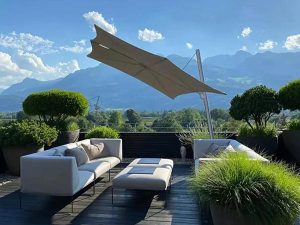
Offset and cantilever umbrellas need more attention because their canopy sits away from the pole. This open shaded area is useful for lounge sets and dining tables, but it also creates more leverage at the base.
Most side-pole umbrellas use a cross base or a purpose-designed base frame. The frame alone is usually only the support platform. The actual stability comes from compatible counterweights, such as filled base sections, weight plates, or other ballast specified for that model.
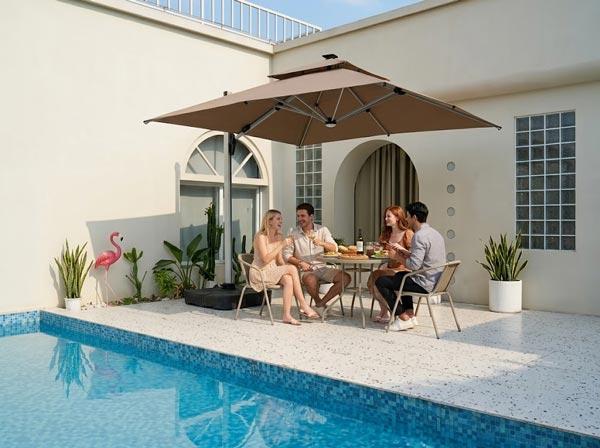
Do not treat a cross base as complete if no counterweights are installed. Before ordering or using a cantilever umbrella, check the canopy size, frame design, base configuration, locking points, and the recommended operating conditions together. For a deeper look at this issue, see how much wind a cantilever umbrella can take.
4. Consider Water, Sand, or Weight Plates Only When They Fit the Base System
Water-filled and sand-filled base sections are common because they can be transported empty and filled after installation. They can be practical for patio use when the base system is designed for them. Weight plates can also be a clean option for some cross-base layouts.
The key point is compatibility. The base sections need to fit the frame properly and provide the ballast specified for that umbrella. They should not shift, crack, or interfere with the locking mechanism. In commercial spaces or exposed locations, a portable ballast system may not be the right long-term answer.
5. Use a Permanent Mount Only for a Suitable Fixed Installation
A deck mount, ground sleeve, anchor plate, or bolted base can be useful when an umbrella will remain in one location for a long time. Restaurants, hotels, pool decks, and planned patio zones may benefit from a fixed system because it can keep the area clear of bulky portable bases.
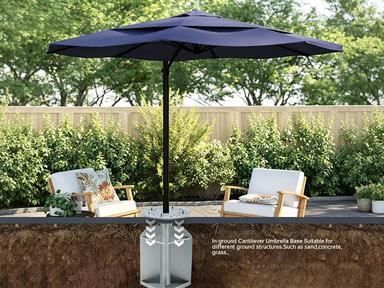
This option should be planned rather than improvised. The mounting hardware, anchor points, ground material, waterproofing layers, and load capacity all need to suit the product and the site. A simple ground screw or anchor intended for soft ground is not automatically appropriate for a large patio umbrella or a hard deck surface.
6. Close the Canopy Before Wind Becomes a Problem
Even a well-matched base cannot make an open umbrella safe in every condition. The canopy acts like a sail. Once gusts become strong or unpredictable, leaving it open increases the chance of frame damage, movement, or tipping.

Close the canopy before strong wind, storms, or extended unattended periods. If the umbrella has a protective cover or tie strap, use it according to the product instructions. This habit protects the canopy and frame, and it is just as important as choosing a suitable base in the first place.
How to Choose the Right Setup for Your Outdoor Space
For a sheltered backyard table, a center-pole umbrella with a compatible weighted base and table-hole support may be enough for normal use. For a larger open patio or poolside seating area, an offset or cantilever model should be reviewed with its full cross-base and counterweight system.
For restaurants, hotels, or other long-term outdoor projects, the decision should include more than the umbrella itself. Check the mounting location, daily closing routine, staff operation, replacement-part plan, and whether the site needs a portable or permanent base solution.
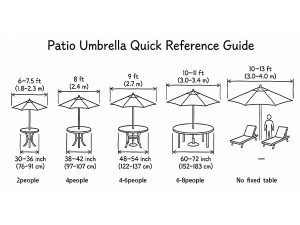
Canopy size also affects the decision. Before confirming the umbrella footprint, compare the seating layout and shaded area with this patio umbrella size guide. A better size match can reduce the temptation to use an oversized canopy in a space that cannot support it safely.
FAQ
1. Is a heavier umbrella base always enough for wind?
No. A heavier base can improve stability, but it cannot make every umbrella suitable for every wind condition. The pole position, canopy size, frame design, site exposure, and the manufacturer’s operating instructions all matter.
2. Can I use a patio table without an umbrella base?
No. A table hole helps guide and support a center pole, but it is not designed to replace the base. The umbrella still needs a compatible base that provides resistance against tipping.
3. Does an offset umbrella need a special base?
Usually, yes. Offset and cantilever umbrellas normally use a cross base or another system designed for their side-pole structure. The required counterweights and base configuration should match the specific model.
4. Can I leave a patio umbrella open in windy weather?
It is safer to close it before the wind becomes strong or unpredictable. A fixed base reduces everyday movement, but it does not remove the risk created by an open canopy in gusty conditions.
Conclusion
Securing a patio umbrella from wind is not simply a matter of adding more weight. The right setup depends on the umbrella type, canopy size, site exposure, and whether the base or mounting system is designed for that exact model.
Before you choose a solution, confirm where the umbrella will be used, how exposed the space is, and whether the product instructions support a portable base or a fixed mount. For wholesale and project buyers, this also means matching the umbrella, base system, and daily-use guidance as one complete package.
LIDA OUTDOOR can help buyers compare compatible umbrella structures and base options for residential, retail, or commercial outdoor spaces. You can browse the current patio umbrella range or contact our team to discuss a suitable setup for your market.