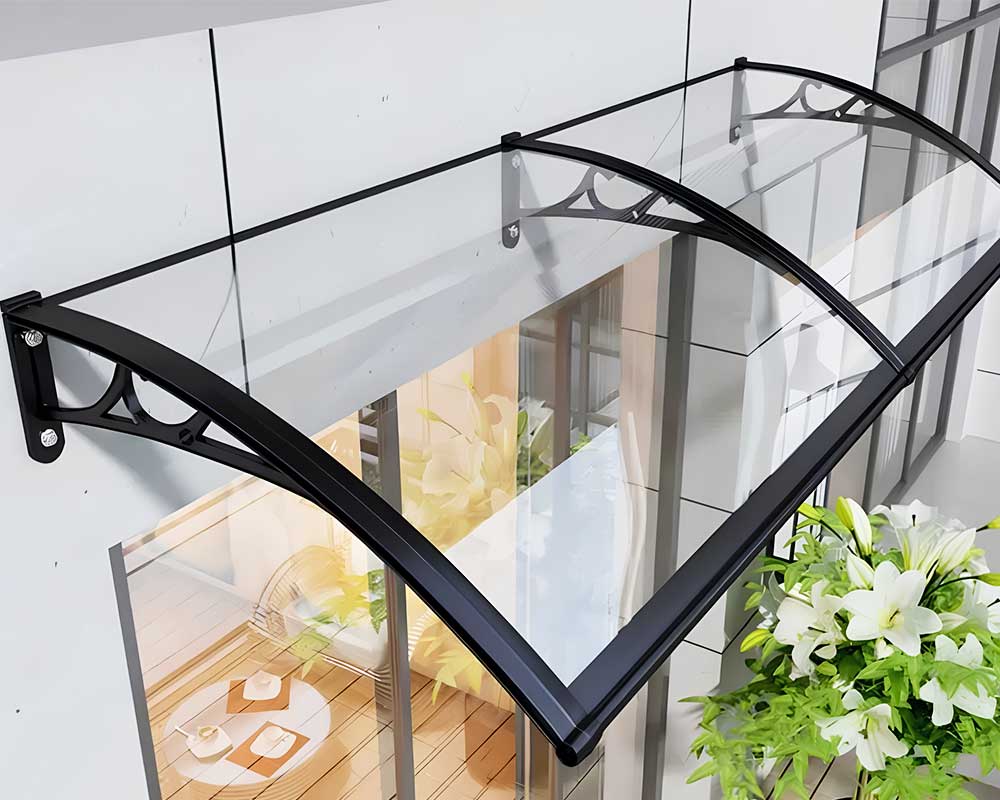

In recent years, modern polycarbonate awnings have become a popular alternative to traditional manual awnings that protect doors from sun and rain. Why is polycarbonate often chosen for these structures? What are its advantages and drawbacks? As a manufacturer with over 20 years of experience in patio shading products, LIDA OUTDOOR explains the key points to help you make an informed decision.
What Is a Polycarbonate Awning?
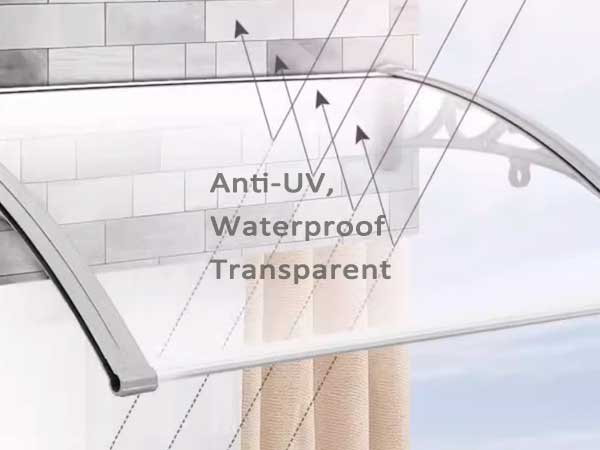
A polycarbonate awning is a light and durable cover made from polycarbonate panels. Polycarbonate sheets are known for their clear, glass-like appearance and high impact resistance. Their impact resistance is much higher than that of standard glass. The panels are also light, easy to work with, and simple to install. Multiwall panels can provide better heat insulation than solid sheets because they contain air spaces. When the panels have a UV-protective layer for outdoor use and are installed correctly, they can stay clear and resist the weather for longer. This makes them a practical choice for awnings.
Polycarbonate Awning Types: Multiwall vs. Solid
There are two main types of polycarbonate panels used for awnings: multiwall polycarbonate panels and solid polycarbonate panels. Multiwall panels have a hollow structure with several layers or honeycomb-shaped cells. Solid panels are made from one dense and strong sheet. At LIDA OUTDOOR, we manufacture both options.
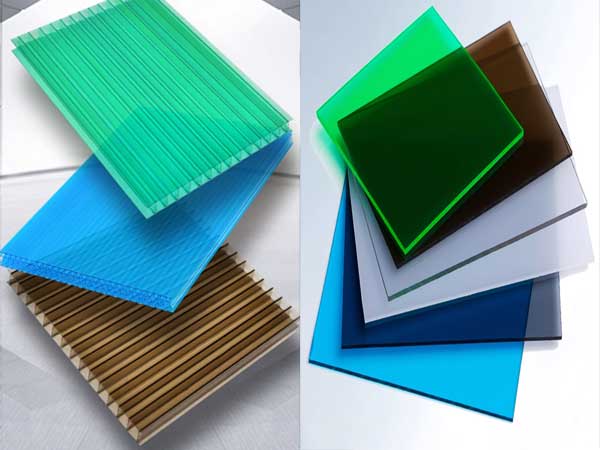
Both types can let in plenty of light and resist UV damage when they have suitable UV protection. However, solid polycarbonate panels look clearer and more like glass. Multiwall panels are lighter and easier to handle. They are often suitable for projects where weight and heat insulation are important. Solid panels are often chosen when a project needs more clarity and the look of a solid sheet. Your choice depends on the needs of the project, including weight, strength, insulation, appearance, and budget.
| Feature | Multiwall Polycarbonate Awning | Solid Polycarbonate Awning |
| Weight | Lighter | Heavier |
| Insulation | Superior | Moderate |
| Soundproofing | Depends on thickness, structure, span, and installation | Depends on thickness, span, and installation |
| Strength | Moderate | High |
| Impact Resistance | Strong with the correct panel and support design | High with the correct panel and support design |
| Light Transmission | Excellent | Excellent (Closer to glass) |
| UV Resistance | Excellent (with UV stabilizer) | Excellent (with UV stabilizer) |
| Processing Ease | Light and fairly easy to handle | Needs suitable cutting and fixing methods |
| Main Applications | Projects that need lower weight and better heat insulation | Projects that need clarity and a solid-sheet appearance |
| Selection Considerations | Weight, insulation, cost | Strength, transparency, safety |
5 Key Advantages of Polycarbonate Awnings
Polycarbonate panels are now widely used in construction and outdoor design, especially for awnings. They are light and clear, but they can also handle many outdoor conditions. Here are five key reasons why more people choose polycarbonate awnings.
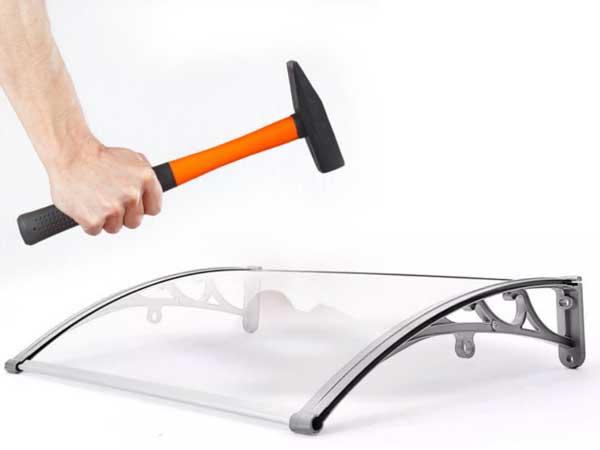
1. High Impact Resistance
Polycarbonate panels are often chosen because they have high impact resistance. They can resist impact better than many traditional glazing materials, including standard glass and acrylic sheets. This makes the right type of polycarbonate panel suitable for awnings in areas where hail or falling objects may be a problem. However, the exact strength depends on the resin grade, panel structure, thickness, support spacing, temperature, and test method. For projects with specific safety or load needs, use the test data for the exact panel.
2. Good Weather Resistance
Polycarbonate panels are made to work well in many outdoor settings. High-quality outdoor panels often have a UV-protective layer added during production. This layer protects the sheet from sunlight and slows down color changes. Some products have UV protection on one side only. On these products, the marked UV-protected side must face the sun, as explained in Palram’s official guidance. When buyers choose the right product and install it correctly, the panels can stay clear and strong during long periods of sun, wind, and rain. Service temperature, UV performance, light transmission, and warranty vary by product and are listed in the manufacturer’s technical data. Clear panels are useful above entrances and walkways where daylight matters. Tinted or opal panels may be better for patios where glare or solar heat is a concern.
3. Fire Performance
Fire performance is another important point to consider, especially for projects with strict safety needs. Some polycarbonate products are rated as self-extinguishing or receive other fire ratings under set test conditions. Other resin grades, panel structures, and thicknesses may receive different ratings. For public spaces, commercial buildings, or projects with fire-safety rules, buyers should check the rating and test standard for the exact product. They should also check the panel thickness and supporting documents. The word “polycarbonate” alone does not prove that a panel has a fire rating.
4. Relatively Low Maintenance
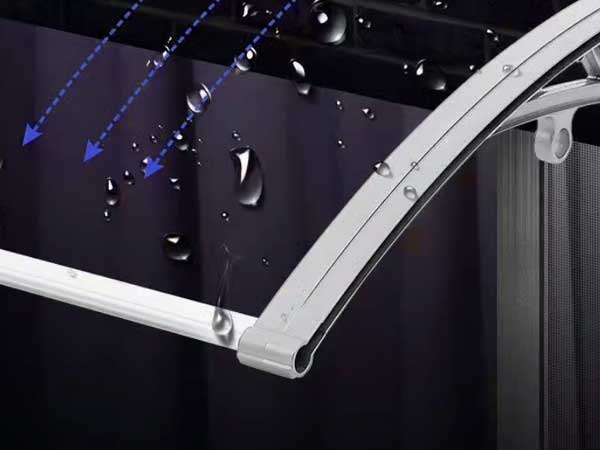
Fabric awnings can collect dirt and may need frequent cleaning. In comparison, polycarbonate panels have a smooth surface that is fairly easy to wash. Rainwater may remove some loose dirt, so owners may not need to clean the panels as often. However, the panels are not fully self-cleaning. Dust, pollen, bird droppings, algae, and other dirt can still build up. Owners should use water, mild soap that is safe for the panel, and a soft cloth or sponge. They should avoid rough cleaners, sharp tools, and solvents that may damage the panel.
5. A Strong and Durable Frame
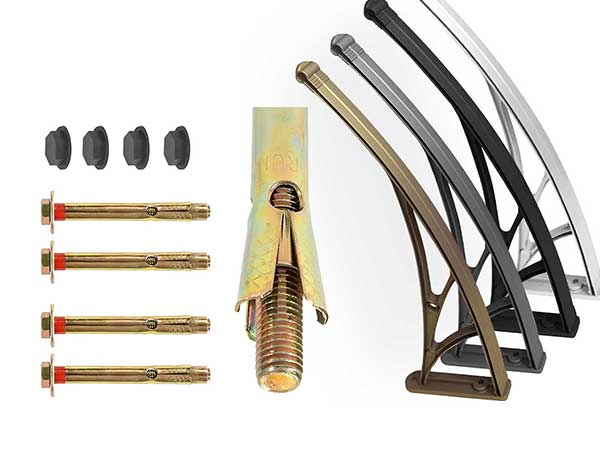
The life of a polycarbonate awning depends on both the panels and the strength of its frame. High-quality awnings often use frames made from strong aluminum alloys. These materials resist corrosion and oxidation. This helps the frame stay strong and keep its appearance in wet or rainy conditions. Aluminum frames also support the overall strength and stability of the awning. Well-designed gutters carry water away and protect the structure from long periods of moisture. The actual service life depends on the panel grade, UV protection, frame finish, fasteners, seals, local climate, installation quality, and maintenance. Written warranties are more useful than one general claim about service life.
5 Possible Drawbacks of Polycarbonate Awnings
Polycarbonate panels offer many benefits, but they also have some limits. Here are the main drawbacks to consider:
1. Quality Can Vary
The quality of polycarbonate panels can vary greatly. Acrylic and polycarbonate sheets can look similar, but they do not perform in the same way. Buyers should therefore confirm the material instead of judging it only by its appearance. The right polycarbonate panel should offer strong impact resistance and good outdoor durability. However, performance may be lower if the product has poor UV protection, the wrong thickness, or limited documents. Price alone does not prove quality. A fair comparison should include the material grade, panel structure, thickness, UV protection, test data, and written warranty.
2. Noise During Rain
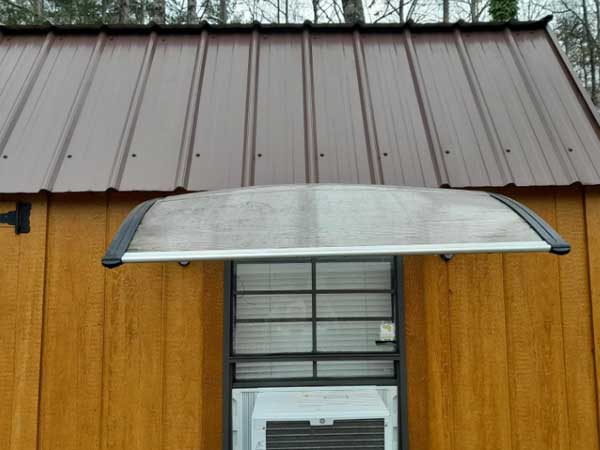
Noise during rain is a common concern with polycarbonate awnings. Raindrops hitting a hard panel may create a clear “drumming” sound, especially during heavy rain. This sound can be a problem when the awning is above or beside a bedroom or home office. The noise level depends on the panel type and thickness, span, frame stiffness, fixings, roof area, and nearby rooms. Thicker panels, extra supports, or other ways to reduce noise may help in some cases. However, they can also increase the cost. When choosing a polycarbonate awning, buyers should consider the balance between noise and other benefits.
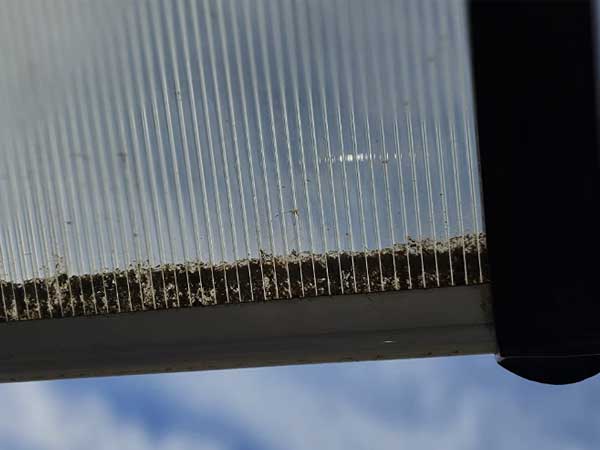
3. Yellowing Over Time
Polycarbonate panels may turn yellow or become less clear over time. This is more likely after long outdoor use or when UV protection is poor. High-quality outdoor panels usually have a UV-protective layer that slows this process. However, the result also depends on the product, the direction of installation, local weather, cleaning methods, and maintenance. Product-specific weathering data and written warranties give a better guide because polycarbonate panels do not all age in the same way.
4. A Fixed Design
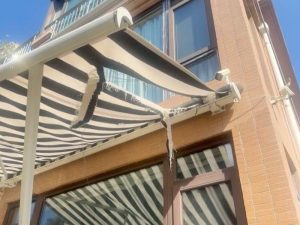
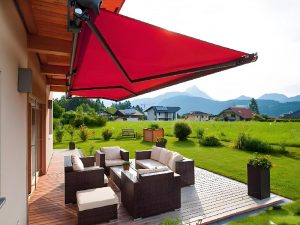
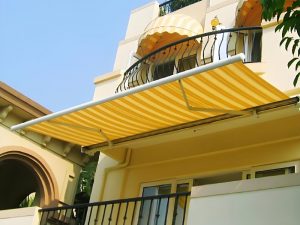
Polycarbonate awnings are usually fixed structures. This means users cannot easily pull them back or adjust them after installation. The fixed design gives the awning strength and stability, but it also limits flexibility. Depending on its color and how clear it is, a fixed panel may reduce natural light or let in more solar heat than expected. It may also block the view when protection is not needed. Retractable fabric awnings are easier to adjust. A fixed polycarbonate awning may therefore be less suitable for users who want to change the shade during the day or across the seasons. Readers who are still comparing fixed and movable structures can review the main types of awnings before making a decision.
5. A Higher Cost Than Fabric Awnings
Polycarbonate awnings can cost more at the start than simple fabric awnings. A complete system includes hard panels, support frames, brackets, seals, drainage parts, and installation. The final price depends on the size, panel details, frame material, load needs, mounting conditions, and labor. A correctly designed system may offer lasting protection. For a fair price comparison, compare complete systems with the same features instead of panel prices alone.
Conclusion
Polycarbonate awnings are a strong and flexible option for long-term weather protection, especially above windows and doors. The panels, frame, supports, and installation must be suitable for the site. When all these parts are chosen correctly, the awning can perform well during long periods of outdoor use. A suitable polycarbonate panel can also offer an important benefit in areas with hail or falling objects. However, some users need adjustable shade or want less noise during rain. For these users, a more flexible option, such as a retractable awning, may be a better choice.
Thank you for reading. If you need wholesale awning products, please contact us for the latest factory prices.
How is polycarbonate awningd suseptible to noise during rain?
Yes, polycarbonate awnings can be noisy during rain, especially if hollow-core panels are used, as the hard surface amplifies the sound of raindrops. Compared to fabric, the rigid material doesn’t absorb impact well. Using solid sheets or adding rubber dampers can help reduce the noise.
I want to install full lenth of my back porch 64ft can that be done
Interested
How long would it last when exposing to the Sun 5 to 6 hours a day?