

Choosing a roof material is one of the key decisions when buying or specifying a hardtop gazebo. The roof affects how much light enters the space, how the gazebo looks, how it is installed and maintained, and how the overall product performs in different conditions.
Polycarbonate and galvanized steel are two common options, but they differ in weight, light transmission, maintenance requirements, durability, and overall product positioning. In this guide, we compare their main advantages, limitations, and practical differences to help you better understand which factors matter when choosing a gazebo roof.
Polycarbonate vs. Galvanized Steel Gazebo Roofs
Before looking at the advantages and disadvantages in detail, here is a quick comparison of the main differences between polycarbonate and galvanized steel gazebo roofs.
| Feature | Polycarbonate Roof | Galvanized Steel Roof |
|---|---|---|
| Weight | Lightweight | Heavier |
| Light Transmission | Allows natural light; varies by panel color and specification | No light transmission; provides full overhead shade |
| Shade & Heat Control | Varies by tint, panel structure, and solar-control properties | Blocks direct sunlight; overall comfort also depends on roof design and ventilation |
| Appearance | Light, modern, and available in different colors or tints | Solid, substantial hardtop appearance |
| Corrosion | Does not rust, although frames and fasteners still require protection | Zinc coating provides corrosion protection; performance depends on coating and environment |
| Typical Service Life | Around 10–15 years for quality UV-protected panels; varies with panel grade, climate, and maintenance | Around 15–25+ years with suitable coating and maintenance; varies with zinc coating, finish, and environment |
| Cost | Often competitive for lightweight gazebo designs | Often higher for comparable solid-roof designs |
| Installation | Lighter panels are generally easier to handle | Heavier panels may require more careful handling and assembly |
| Wind & Snow Performance | Generally lower than steel roofing; panel thickness and support spacing are important | Generally higher due to greater strength and rigidity |
Polycarbonate Gazebo Roof
Polycarbonate is a popular roofing material for gazebos because it combines natural light, low weight, and relatively easy handling. It is commonly used in residential and retail gazebo products, especially where buyers want a brighter and lighter-looking outdoor space.

1. Advantages
1) Flexible Light Transmission and Panel Options
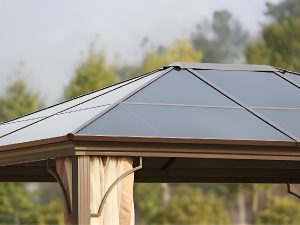
Polycarbonate roofing is available in different structures, thicknesses, colors, and tints. Multiwall panels commonly include twin-wall and triple-wall designs, with thicknesses such as 6 mm, 8 mm, 10 mm, and 16 mm depending on the product.
Light transmission also varies significantly. Clear panels allow much more daylight through, while bronze, opal, grey, and solar-control options reduce brightness and solar gain. This gives buyers more flexibility to balance natural light, shade, and appearance.

2) Lightweight and Easier to Handle
Polycarbonate panels are significantly lighter than steel roof panels. This makes them easier to handle during packing, transportation, and installation, especially for flat-packed gazebo products.
For retailers and importers, the lower roof weight can also help reduce package weight, simplify handling, and improve shipping efficiency.

3) Modern Appearance With Multiple Color Options
Polycarbonate roofs create a lighter and more open appearance than solid metal roofs. Common options include clear, bronze, opal, grey, and other tinted finishes, making them suitable for modern, minimalist, and garden-style gazebo designs.

4) Lower Cost in Many Gazebo Applications
In most comparable gazebo applications, polycarbonate roof panels are generally less expensive than galvanized steel roofing. Their lower weight and simpler handling can also help reduce packaging, transportation, and installation costs.
For buyers and retailers, this makes polycarbonate useful for more price-sensitive product ranges and markets where shipping efficiency is important.
5) UV Protection Improves Outdoor Durability
Quality outdoor polycarbonate panels usually include a UV-protective layer designed to reduce degradation, yellowing, and loss of light transmission caused by prolonged sun exposure.
Many established polycarbonate manufacturers offer 10-year limited warranties on selected UV-protected roofing products. Good UV protection can therefore make polycarbonate a practical long-term roofing material for outdoor gazebos.

2. Disadvantages
1) Quality Has a Major Impact on Long-Term Performance
Polycarbonate performance varies widely between panel grades. Lower-quality panels or products with inadequate UV protection may yellow, become brittle, or lose clarity faster under prolonged outdoor exposure.
For long-term outdoor use, panel quality and UV protection are therefore especially important.

2) Light Transmission Can Increase Solar Heat
Because polycarbonate allows part of the sunlight to pass through, the area below the roof can become warmer under strong sun.
Clear panels usually transmit more light and solar energy, while bronze, opal, or solar-control panels can reduce heat gain. Buyers in hot climates should therefore pay attention to panel color and solar-control performance.

3) Lower Wind and Snow Resistance Than Steel Roofing
Compared with steel roofing, polycarbonate panels are lighter and less rigid. Under higher wind pressure or snow loads, they can flex more and generally require closer support spacing.
For this reason, polycarbonate roofs may be less suitable for areas with heavy snow or demanding wind conditions unless the panel thickness, support spacing, and roof design are selected accordingly.

Galvanized Steel Gazebo Roof
Galvanized steel is a common choice for hardtop gazebos when full shade, higher roof rigidity, and a more solid appearance are priorities. Compared with polycarbonate, it creates a more enclosed and permanent-looking roof and is often used for mid- to high-end gazebo products.

1. Advantages
1) Stronger and More Rigid Roof Panels
Galvanized steel panels are generally stronger and more rigid than polycarbonate panels. They flex less under load and can provide better resistance to deformation under wind pressure, snow, and other external loads.
Also Read: How Much Wind Can a Gazebo Withstand?
For buyers in areas with demanding weather conditions, this makes steel roofing a more suitable option when higher roof strength is an important requirement.

2) Provides Full Shade
Unlike translucent polycarbonate, galvanized steel does not allow sunlight to pass through. It provides complete overhead shade and helps block direct solar radiation.
This makes steel-roof gazebos especially suitable for hot, sunny locations or for users who prefer a more fully shaded outdoor living space.

3) Longer Typical Service Life
A properly coated galvanized steel roof generally has a longer service life than polycarbonate roofing. For gazebo applications, a typical service life of around 15–25 years or more can be expected when the zinc coating, surface finish, and maintenance are suitable for the environment.
The zinc layer protects the underlying steel from corrosion, while additional powder coating or paint can provide further protection and expand the available color and finish options.

4) Solid and Premium Appearance
Steel roofing gives a gazebo a more substantial, permanent, and architectural appearance. It is commonly used in hardtop gazebos positioned for higher-value residential, retail, or project markets.
For retailers and distributors, this can support a higher product position and help differentiate premium gazebo ranges from lighter entry-level models.

5) Good Corrosion Resistance With Proper Protection
Galvanizing adds a protective zinc layer to the steel, helping slow corrosion and extending outdoor service life.
This makes galvanized steel suitable for many outdoor environments. In humid or coastal locations, however, coating thickness, surface finish, salt exposure, and maintenance become more important because zinc corrodes faster in more aggressive environments.
2. Disadvantages
1) Heavier and More Difficult to Handle
Galvanized steel roof panels are considerably heavier than polycarbonate panels. This can increase package weight and make handling, transportation, and installation more demanding.
For retailers and e-commerce products, heavier cartons may also increase logistics costs and require more people during assembly.

2) Usually Higher Cost
Galvanized steel roofing is generally more expensive than polycarbonate roofing in comparable gazebo applications. The steel itself, forming process, surface treatment, and heavier packaging all contribute to the higher overall cost.
This can make steel-roof gazebos less suitable for highly price-sensitive product ranges, although the higher cost is often matched by a more premium appearance and longer service life.
3) No Natural Light Transmission
A solid steel roof completely blocks overhead daylight. While this provides full shade, it also creates a darker and more enclosed space underneath the gazebo.
For users who want a bright outdoor area or prefer natural daylight during the day, polycarbonate may provide a more suitable experience.

4) Coating Damage Can Lead to Corrosion
Galvanized steel has good corrosion resistance, but the protective zinc and surface coating can be damaged by scratches, cutting, impact, or improper handling.
Once protective layers are damaged, exposed areas may become more vulnerable to corrosion, especially in humid or salt-rich environments. Coastal locations therefore require greater attention to coating quality and maintenance.

Which Gazebo Roof Should You Choose?
The better choice depends mainly on how the gazebo will be used and what your customers value most.
| If You Prioritize | Polycarbonate Roof | Galvanized Steel Roof |
|---|---|---|
| Natural light | ✓ Better choice | — |
| Lower roof weight | ✓ Better choice | — |
| Easier handling and installation | ✓ Better choice | — |
| More competitive price | ✓ Better choice | — |
| Shipping efficiency | ✓ Better choice | — |
| Full overhead shade | — | ✓ Better choice |
| Higher roof strength and rigidity | — | ✓ Better choice |
| Longer service life | — | ✓ Better choice |
| Premium hardtop appearance | — | ✓ Better choice |
| Higher-value residential or commercial positioning | — | ✓ Better choice |
For importers and retailers, the roof material also affects product positioning. Polycarbonate gazebos are often better suited to price-sensitive and fast-moving product ranges, while galvanized steel models are generally easier to position as premium, longer-lasting hardtop gazebos.
LIDA OUTDOOR supplies both polycarbonate and galvanized steel hardtop gazebos for wholesale, retail, and project applications. If you are comparing roof materials for a new gazebo range, we can help recommend suitable models and specifications based on your target market and product requirements.