
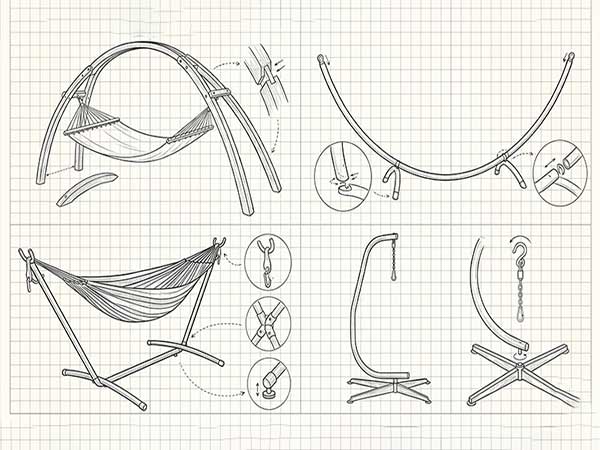

When shopping for a hammock, many people also consider getting a stand. But once they start comparing options, they quickly realize that there are quite a few types of hammock stands on the market. Different products can vary a lot in material, structure, size, shape, portability, and use case. If you choose the wrong one, it may not only be inconvenient to place, but can also affect the overall comfort and experience.
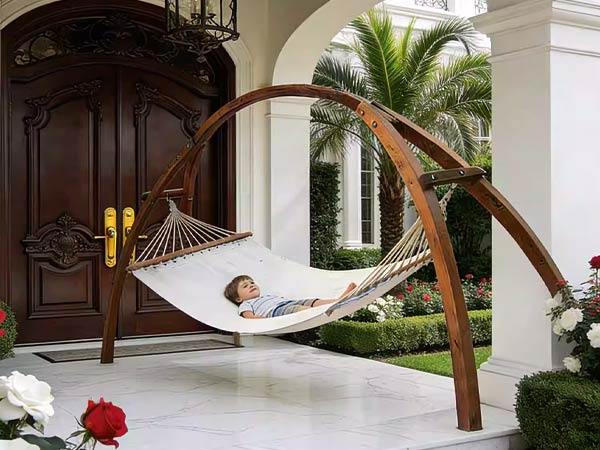
This article looks at those practical concerns and gives you a quick overview of the most common types of hammock stands, along with the main differences in materials, structural styles, and usage scenarios. The goal is to help you figure out which type fits your needs more clearly. For LIDA OUTDOOR distributors and partners, understanding these basic categories can also make it easier to give customers more useful recommendations.
Common Types of Hammock Stands
Although many hammock stands may look similar at first glance, the real differences usually come down to three things: material, structural style, and intended use. For most buyers, the most common options include wooden hammock stands, steel hammock stands, portable stands, and hammock chair stands.
Wood and steel stands mainly reflect differences in materials, while portable stands and hammock chair stands are more about structure and how they will actually be used. You can start with the table below for a quick overview, then look at each type more closely based on your actual needs.
| Type | Main Advantage | Main Limitation |
| Standard Wooden Stand | Natural look, decorative appeal, ideal for long-term placement | Usually heavier, harder to move, and requires more maintenance |
| Standard Steel Stand | Practical, durable, widely compatible, and relatively easy to maintain | More functional in appearance, and some models are still quite heavy |
| Portable Stand | Easy to assemble, store, and carry | Stability can vary significantly from one product to another |
| Hammock Chair Stand | Takes up less space and works well for seated relaxation | Only works with hanging chairs, not traditional two-point hammocks |
1. Wooden Hammock Stands
A wooden hammock stand is a good fit for people who care about backyard style and want a stand that can stay in place for a long time. Its biggest advantage is its natural appearance and stronger decorative feel. In a garden, on a deck, or on a patio, it usually creates a more relaxed and inviting look than a metal stand.
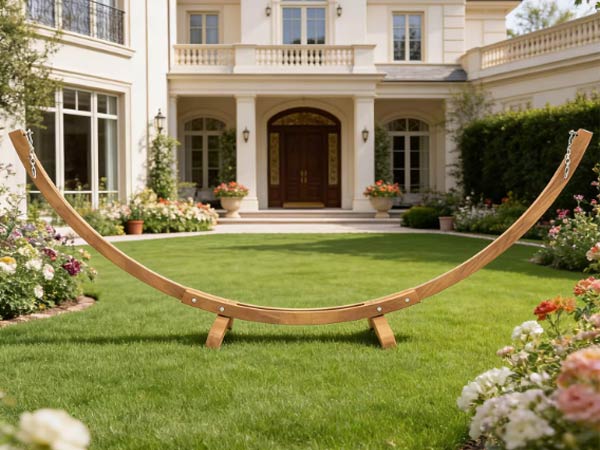
That said, wooden stands are usually heavier and less suitable for frequent moving. They also tend to require more upkeep when used outdoors over time. Because of that, they are generally a better choice for fixed spaces and long-term placement rather than flexible, move-around use. In terms of shape, many wooden stands come in an arc-style design, which often gives them a more cohesive and elegant look.
2. Standard Steel Hammock Stands
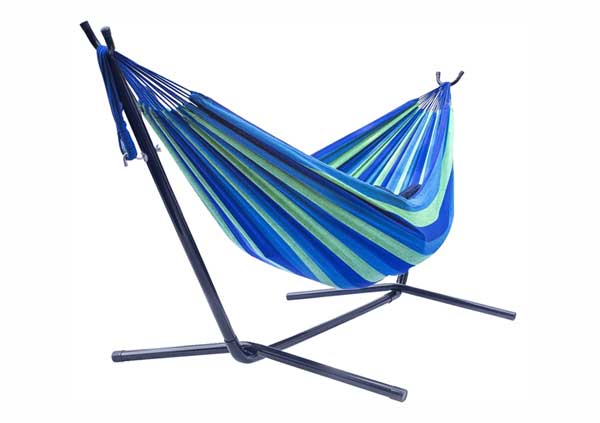
Steel hammock stands are usually the more practical option. They tend to offer a more balanced mix of durability, stability, and low-maintenance everyday use. Many buyers choose them first because they are widely compatible, relatively easy to install, and simple to maintain. They work well in backyards, on patios, or in general indoor and outdoor residential leisure spaces.
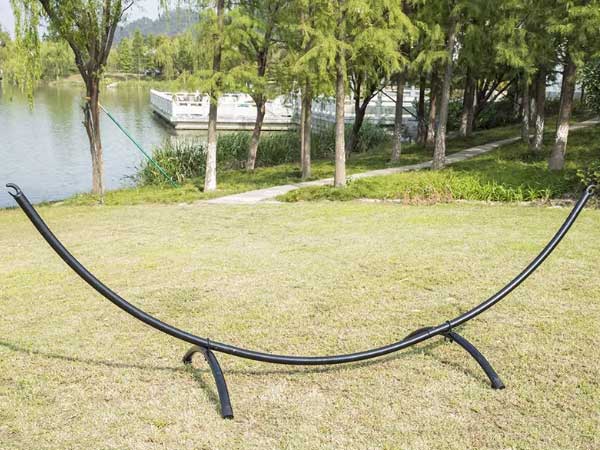
Compared with wooden stands, steel stands usually look more functional and less decorative. Also, while they are often considered more versatile, that does not mean every steel model is lightweight. Some are still fairly heavy and not especially easy to move. Common steel stand shapes include tri-beam and arc styles. Some models also come with adjustable height, which makes them more flexible for different hammock sizes.
3. Portable / Foldable Hammock Stands
Unlike wooden and steel stands, which mainly differ by material, a portable hammock stand is more about how you plan to use it. It is a better choice for people who want more flexibility, such as for camping, travel, beach use, or simply moving the hammock around as needed. The biggest benefit of this type is convenience. It is usually easier to assemble, store, and carry, which makes it more practical for people who do not want their hammock set up in just one place all the time.
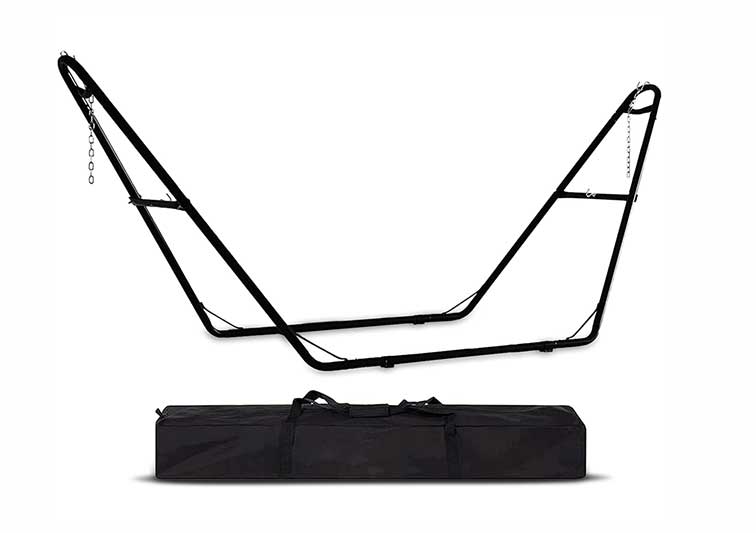
However, because portability is the main selling point, product differences in stability, weight capacity, and overall user experience can be more noticeable. Some portable stands are truly convenient and well-designed, while others sacrifice structural strength in order to be lighter. That is why you should not choose this type based only on whether it folds up or is easy to carry. The overall frame design still matters.
4. C-Frame Hammock Chair Stands
A hammock chair stand is not just a different material option. It represents a different structure and a different use case. It is designed for single-point hanging chairs rather than a traditional two-point hammock, which makes it more suitable for tighter spaces such as balconies, reading corners, or small relaxation areas.
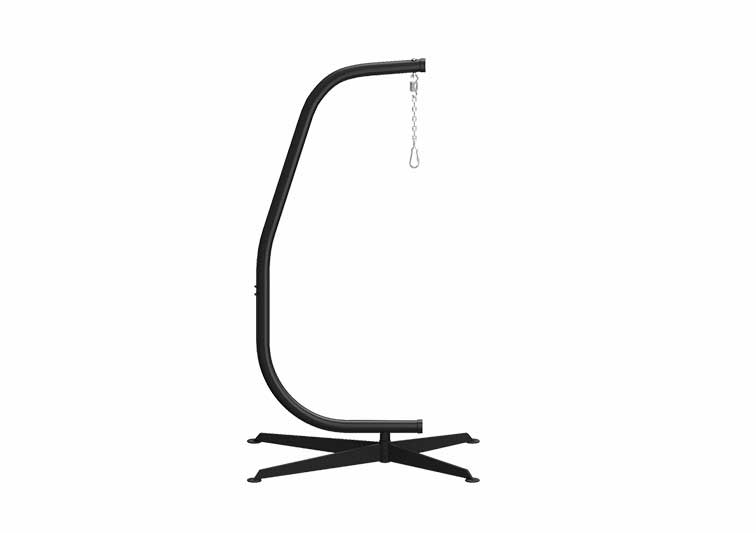
Its main advantage is that it usually takes up less space and is better suited to seated relaxation. For people who want to create a small area for reading, relaxing, or quiet downtime, this type of stand is often a better match than a standard hammock stand. At the same time, its use is more limited. It cannot replace a regular hammock stand. In other words, this type is only worth prioritizing if you are specifically using a hammock chair.
Of course, in terms of appearance, hammock stands come in far more than just arc shapes. You will also find many other structural styles and design options on the market. If you are a DIY enthusiast, you can even look at hammock stand ideas on Instructables to build your own stand.
How to Choose the Right Hammock Stand
When choosing a hammock stand, you do not need to get stuck comparing wood, steel, and portable options right away. A simpler approach is to go through the following four steps first. For regular buyers, this makes it easier to choose the right product more quickly. For retailers, wholesalers, and project buyers, it is also a more practical way to evaluate product options.
Step 1: Check How Much Space You Actually Have
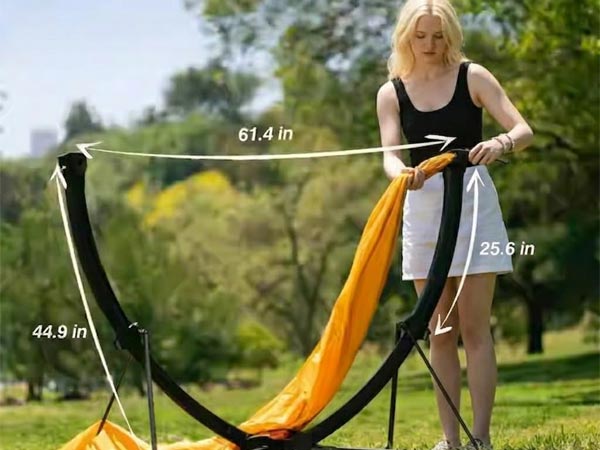
Before choosing a stand, the first thing you should do is confirm where you plan to place it and how much usable space is really available there. Once assembled, a stand often takes up more room than it seems to in product photos. This is especially easy to underestimate in smaller patios, balconies, or indoor corners.
Step 2: Make Sure the Stand Matches the Hammock Size
Many people assume that if the hammock can be attached, it should be fine. But in reality, size compatibility directly affects ground clearance, load distribution, and overall comfort when sitting or lying down. That is also why experienced suppliers usually do not rely on vague phrases like “fits most hammocks.” Instead, they provide a clearer compatibility range. For buyers, the more specific the information is, the lower the chance of making a mistake later.
Step 3: Decide Whether You Need a Fixed or Flexible Setup
This step is mainly about how you plan to use the stand over time. If it will stay in a backyard, on a deck, or on a patio for long-term use, then stability, durability, and overall appearance should be your main priorities. But if you expect to move it often, store it away, or take it on camping trips or vacations, then a portable stand is usually the better option.
In other words, the real question is not just “Do I like this design?” but “How will I actually use it later?”
Step 4: Check Weight Capacity and Assembly Convenience
Finally, look at the more practical details, such as weight capacity, assembly method, whether one person can put it together easily, and whether storing it later is actually realistic. For regular buyers, these details directly affect day-to-day use. For wholesalers, retailers, and project buyers, they can also affect return rates, customer satisfaction, and post-sale feedback. So even though this is the last step, it should not be overlooked.
What Should You Pay Attention to When Buying a Hammock Stand?
When buying a hammock stand, the biggest mistakes usually do not come from choosing the wrong category. More often, the real problems come from small details that are easy to ignore. Based on LIDA OUTDOOR’s years of sales experience, here are four points worth paying closer attention to.
1. Do Not Assume the Stand Comes with the Hammock
Some products include only the stand and do not include a hammock as part of the full set. Before placing an order, it is always better to confirm exactly what is included. That can help you avoid extra matching work later and reduce unnecessary communication or purchasing issues.
2. Do Not Overlook Long-Term Maintenance
Whether it is a wooden stand or a metal stand, any product used outdoors over time should be evaluated for maintenance needs and weather resistance. So before buying, do not focus only on whether you like the appearance. You should also think about whether you are comfortable with the upkeep it may require later.
3. Do Not Underestimate Assembly and Moving Difficulties
Some stands may look simple, but once it comes time to assemble them, the number of parts, connection method, weight of each component, and whether repeated disassembly is realistic can all affect the actual experience. For retail and wholesale buyers, these details can also influence warehousing, shipping, and end-user installation feedback, so they should not be judged by appearance and basic specs alone.
4. Do Not Focus Only on Price
Low prices are often the easiest thing to notice, but in real purchasing decisions, the long-term experience depends on much more than the unit cost. Stability, hardware durability, packaging quality, shipping standards, and consistency from batch to batch all matter. For bulk buyers in particular, these factors are often more important than the surface price itself. Once problems show up on the back end, the cost is usually not limited to one product. It can affect the entire customer experience and overall trust in the product.
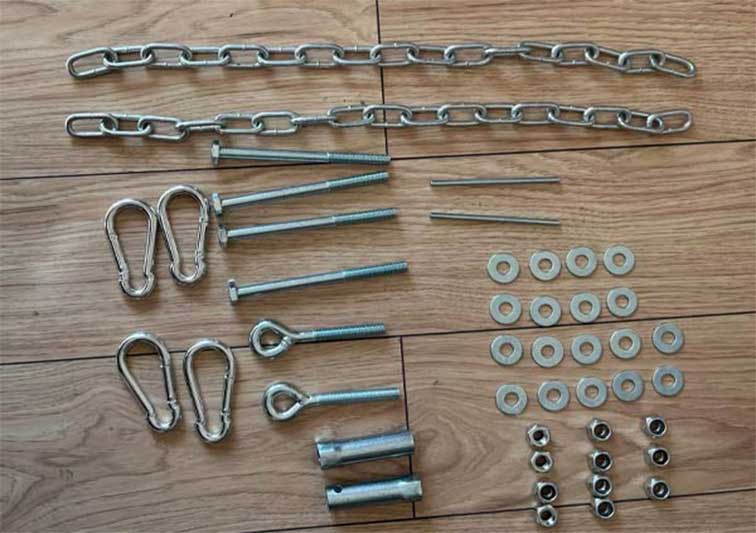
Once you take these details into account, the next thing to evaluate is no longer just a single stand model. It becomes a question of whether the supplier can offer more reliable support in structural design, material selection, quality control, and supply stability. For bulk purchasing, retail product selection, or custom cooperation, these factors are often more important than the style alone.
Conclusion
Overall, this article has walked you through the most common types of hammock stands, the main differences between them, and the key points to consider before buying. As long as you first look at your available space, intended use, and practical needs, and then avoid a few common buying mistakes, choosing the right hammock stand is not that difficult.
If you are looking for a reliable wholesale or custom supplier for hammock products, feel free to learn more about LIDA OUTDOOR and its related products and services.