
When comparing patio umbrellas, you may often see two similar terms: cantilever umbrella and offset umbrella. Some sellers use only one of them, while other product pages include both terms in the title or description. This can easily create confusion for buyers: are they two different umbrella types, or just different names for the same side-pole patio umbrella?
The answer depends on how the terms are used. In many product listings, they overlap, so buyers should not treat the names as strict labels. The more useful question is what each term suggests about pole position, support structure, adjustment features, and market level.
Cantilever vs Offset Umbrella: Are They the Same?
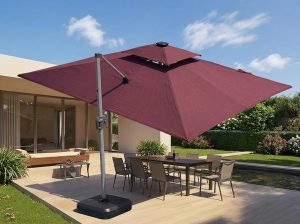
In most product listings, cantilever umbrella and offset umbrella refer to the same general family of outdoor umbrellas. Unlike a center pole umbrella, the pole is not placed in the middle of the canopy. Instead, the umbrella is supported from the side, leaving the shaded area more open for dining sets, lounge chairs, poolsides, or commercial patio spaces.
However, the two terms describe the product from different angles. Offset umbrella is mainly a position-based term. As long as the pole is offset from the center of the canopy and the umbrella provides shade from the side, it may fall into the offset umbrella category.
This means offset umbrella is better compared with center pole umbrella or market umbrella. A center pole umbrella has its pole in the middle of the canopy and is often used with a patio table hole or a central base. An offset umbrella moves the pole to the side, so the area under the canopy can stay more open and flexible.
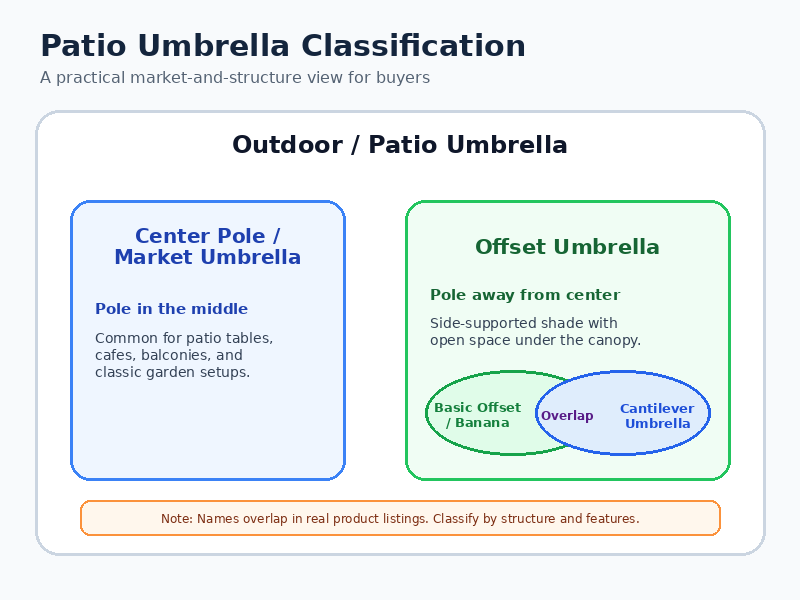
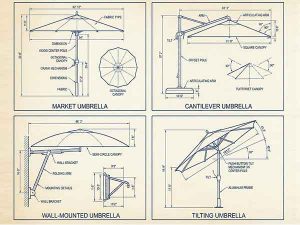
Cantilever umbrella can then be understood as a more specific structural expression within the broader offset umbrella category. It usually emphasizes the cantilever support arm, side-mounted suspension, tilt function, 360-degree rotation, stronger frame, or a higher product level.
There is also an overlap between basic offset umbrellas and cantilever umbrellas. For example, a simple banana-style offset umbrella uses a curved hanging arm and may also be called a basic cantilever umbrella in some markets. But not every cantilever umbrella is a banana umbrella. More advanced cantilever models may use straighter support arms, rotating bases, stronger locking systems, or rectangular canopies for commercial or premium patio use.
So the relationship is not a clean either-or choice. Offset umbrella is the broader side-pole category, while cantilever umbrella usually describes a more defined structure within that category.
Which Term Buyers Use in Different Markets?
The preferred term can vary by market.
In North America, offset umbrellas often appear in retail-friendly product titles, especially for entry-level and mid-range patio umbrellas. A cantilever umbrella is also common, but it may suggest stronger support, better adjustment, or a more premium outdoor shade product.
In the UK and some European markets, cantilever parasol or cantilever umbrella may be more natural terms. Buyers in these markets may use parasols more often than umbrellas when referring to outdoor shade products.
What Should Buyers Compare Beyond the Name?
Names are only a starting point. Two side-pole umbrellas can share a similar title but perform very differently in actual use. Before making a purchase or developing a product line, buyers should compare the structure, adjustment features, use scenario, base system, and price positioning.
1. Structure and Adjustment Features
The first thing to check is the support structure. A basic offset umbrella may use a simple curved arm and a cross base. It is usually suitable for residential patios, small garden spaces, or price-sensitive retail markets. These products are easier to explain and often easier to sell at entry-level price points.
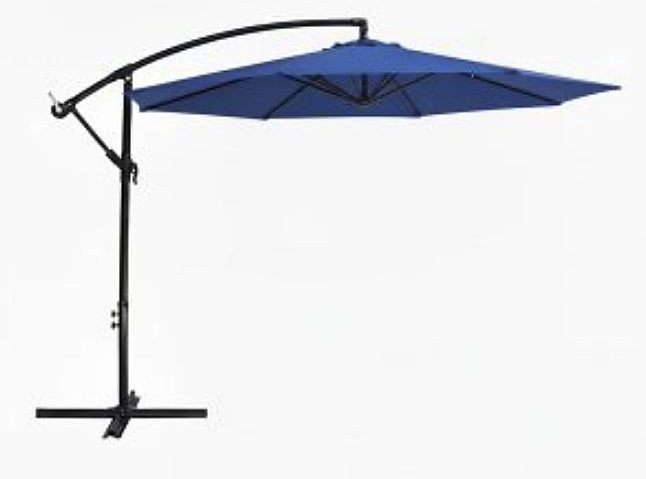
A cantilever umbrella usually suggests a stronger side support system. Many models include a crank handle, tilt adjustment, 360-degree rotation, reinforced ribs, aluminum or steel frames, and a more stable connection between the pole and the canopy. These details are especially important when the umbrella is used for larger lounge sets, poolside areas, cafés, resorts, or commercial patios.
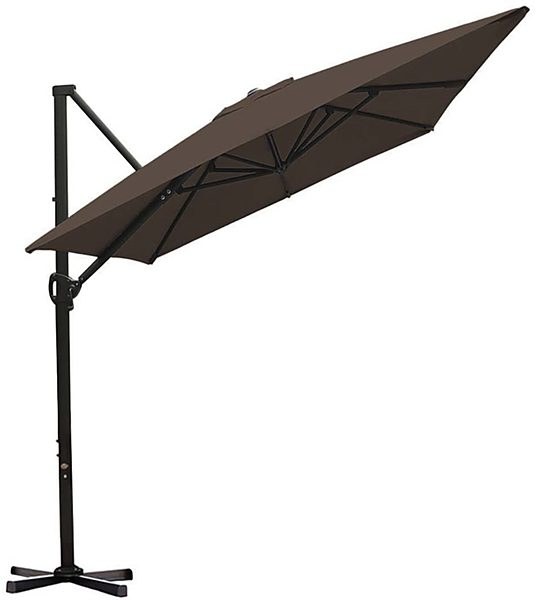
For wholesale buyers, these details affect more than user experience. They also influence packaging size, shipping cost, retail price, after-sales risk, and product positioning. A product that looks similar in photos may be very different once you compare frame thickness, joint design, rotation mechanism, fabric grade, and base solution.

2. Outdoor Space and Use Scenario
The use scenario should guide the product choice. A small backyard does not need the same umbrella structure as a hotel poolside area or an outdoor restaurant. The more open the space, the larger the canopy, and the longer the use time, the more important the support structure becomes.
| Use Scenario | More Suitable Product Direction | Why It Fits |
|---|---|---|
| Small backyard or balcony | Basic offset umbrella or center pole umbrella | Lower cost, simpler structure, easier for casual home use |
| Patio dining area | Offset or cantilever umbrella | Keeps the shaded area open without a center pole blocking the table |
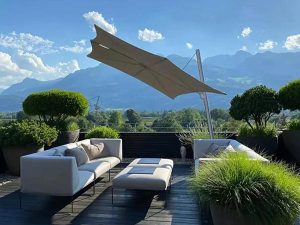
| Poolside or lounge area | Cantilever umbrella | Covers lounge chairs or sofas more flexibly from the side |
| Café, hotel, or commercial patio | Stronger cantilever umbrella | Needs better stability, larger coverage, and stronger frame design |
| Retail entry-level market | Basic offset / banana-style umbrella | Easy to understand, lower price, suitable for seasonal sales |
| Premium outdoor living market | Rotating or rectangular cantilever umbrella | Better adjustment, cleaner design, and higher perceived value |
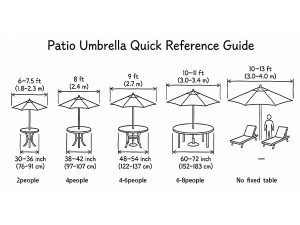
If the buyer is still deciding on canopy size, table layout, or shade coverage, it is better to check a dedicated patio umbrella size guide before confirming the final model.

3. Stability, Base, and Safety
No matter whether the product is called an offset umbrella or a cantilever umbrella, stability should not be ignored. A side-pole umbrella creates more leverage than a center pole umbrella. The larger the canopy and the longer the support arm, the higher the requirements for base weight, pole strength, locking system, and frame connection.
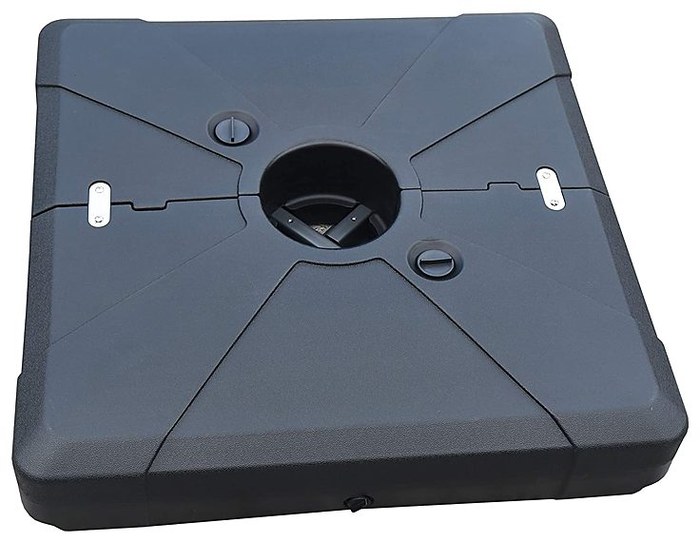
Many side umbrella problems do not come from the canopy fabric itself. They often come from an unsuitable base, a loose joint, a weak frame, or use in weather conditions that are not appropriate for the product. For this reason, buyers should not compare umbrellas by canopy size alone. They should also check the base system and user instructions.
For wholesale or OEM orders, this part is especially important. A product with a large canopy but a weak base solution may look attractive in product photos, but it can create complaints after sale. A suitable base and clear user guidance can reduce safety risks and improve the customer experience.
If the product will be used in a more exposed space, wind conditions and anchoring requirements should be reviewed separately before the buyer confirms the model. This is especially important for larger side-pole umbrellas, where base weight and locking points have a direct impact on daily use. For this topic, a dedicated cantilever umbrella wind guide can help buyers understand the key checks more clearly.
4. Price Positioning and Product Level
Price is another area where the two terms can be misunderstood. In many retail markets, offset umbrella is used as a broad and easy-to-understand name for side-pole umbrellas. It often appears in entry-level and mid-range product listings. Cantilever umbrella, on the other hand, is more likely to be associated with stronger support arms, tilt adjustment, 360-degree rotation, rectangular canopies, or premium outdoor shade solutions.
This does not mean that every cantilever umbrella is more expensive than every offset umbrella. A basic cantilever model and a basic offset umbrella may be close in price. The real cost difference usually comes from canopy size, frame material, fabric grade, joint design, rotation system, base configuration, and packaging requirements.
For buyers, the safest approach is not to judge the product only by name. It is better to compare the full specification sheet and ask how the umbrella will be used in the target market. A low-cost offset umbrella may work well for seasonal backyard retail, while a stronger cantilever umbrella may be more suitable for premium patio furniture collections or commercial outdoor spaces.
How Should Buyers Choose?
If your target customers mainly need a simple side-pole patio umbrella for home use, an offset umbrella may be enough. It is easy to explain, usually more affordable, and suitable for many entry-level outdoor shade needs.
If your market expects better adjustment, a cleaner shaded area, stronger support, or a more premium patio setup, a cantilever umbrella may be the better product direction. It is also more suitable when the umbrella needs to cover lounge chairs, outdoor sofas, poolsides, or commercial seating areas without a center pole in the way.
For wholesale buyers, the best choice should come from the target market, not only from the product name. Before confirming an order, it is worth checking canopy size, frame material, rib structure, rotation or tilt function, fabric grade, base system, packaging requirements, and expected retail price.
Conclusion
In short, cantilever umbrella and offset umbrella often overlap, but they are not strict synonyms. Offset umbrella is mainly a pole-position term, while cantilever umbrella usually describes a more defined side-support structure within that broader category.
Before choosing a model, buyers should confirm the target market first, then check canopy size, support structure, adjustment features, base solution, wind exposure, packaging needs, and expected price level.
For wholesale buyers, retailers, and outdoor furniture brands, this turns the discussion from naming into product-line planning. LIDA OUTDOOR can help compare center-pole, basic offset, and cantilever umbrella structures, then match suitable sizes, fabrics, and base options to different retail or commercial outdoor spaces. You can also browse current patio umbrella products or contact us for model suggestions.